
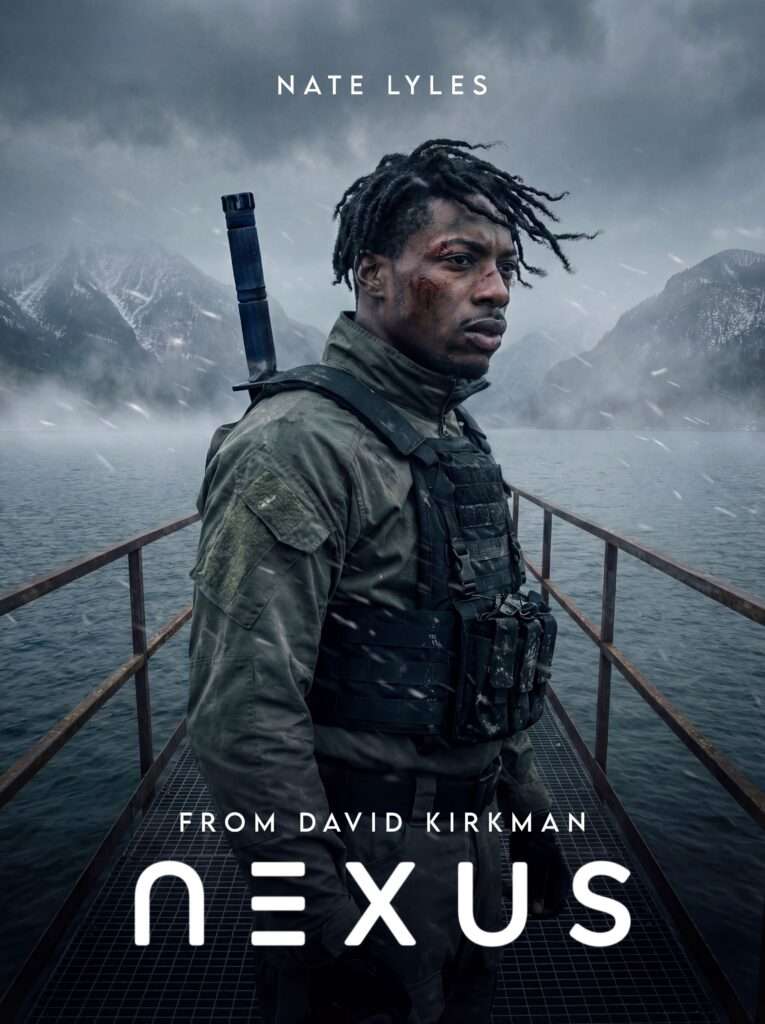
In today’s entertainment landscape, audiences are craving something deeper. Bigger budgets and flashy visuals may grab attention for a moment, but it’s authenticity, emotional weight, and believable performances that leave a lasting impact. That’s exactly where Nate Lyles enters the conversation.
As the lead actor in NEXUS, Lyles delivers the kind of presence that immediately commands attention—not through exaggeration, but through restraint, intensity, and emotional depth. The imagery surrounding the film is striking: a lone figure standing against brutal conditions, visibly worn yet mentally locked in. But underneath the action-driven visuals is something far more human. NEXUS explores survival, uncertainty, pressure, and the psychological toll of navigating environments designed to test every part of a person.

At the center of it all is Nate Lyles.
For audiences unfamiliar with his work, NEXUS serves as an introduction to an actor who understands how to communicate emotion without overexplaining it. His performance carries weight because it feels lived in. Every expression, every pause, every moment of silence contributes to the atmosphere the film is building.
And in a time where audiences are becoming increasingly drawn to grounded storytelling, that matters.
A Film Rooted in Tension and Survival
From the first look alone, NEXUS creates a feeling of isolation. The cold environment, dark skies, and military-inspired visuals immediately signal that this is not a lighthearted story. There’s danger present before a single word is spoken.
But what makes the film intriguing is that the tension doesn’t appear to rely solely on external threats. There’s also an internal battle taking place. The emotional strain visible in Lyles’ character suggests someone navigating far more than physical survival.
That layered approach is part of what makes the project stand out.
Rather than leaning entirely into spectacle, NEXUS appears focused on psychological realism—the emotional effects of pressure, responsibility, fear, and endurance. In many ways, that’s what makes survival stories resonate so strongly with audiences. They force viewers to ask themselves difficult questions:
How would I respond under pressure?
What happens when comfort disappears?
Who do you become when survival is the priority?
These are the kinds of emotional themes that elevate a project beyond action alone.

Nate Lyles Brings Emotional Weight to the Screen
One of the most compelling things about Nate Lyles’ performance is the balance he brings to the role. There’s toughness present, but it never feels performative. Instead, it feels necessary—as though the character has adapted to survive difficult circumstances.
That distinction matters.
Some actors portray strength through aggression or volume. Lyles approaches it differently. His strength comes through focus, control, and emotional discipline. Even in still imagery, there’s a sense that the character is carrying exhaustion, trauma, and determination all at once.
That type of layered performance often creates stronger audience connection because it feels believable.
In many ways, the character’s emotional state mirrors experiences people understand in real life. Most people may never face the extreme physical conditions shown in NEXUS, but many understand emotional pressure, uncertainty, fear of failure, or the challenge of continuing forward when mentally exhausted.
That relatability is what makes performances memorable.
The Preparation Behind the Performance

Taking on a role like this requires more than simply learning dialogue. Physically and mentally demanding projects force actors into a different level of preparation. From endurance training to emotional immersion, these performances often require actors to live within the mindset of the character long before cameras begin rolling.
Lyles has spoken about the importance of fully understanding the emotional reality behind the role. Instead of approaching the character from the outside in, he focused on internal motivation—what this person is fighting for, what they fear losing, and what survival actually costs psychologically.
That approach shows up on screen.
The emotional realism visible throughout NEXUS suggests a performance built on intentionality rather than theatrics. Even moments of silence feel purposeful. There’s a weight behind the eyes that tells audiences this character has experienced loss, pressure, and internal conflict before the story even begins.
That type of storytelling requires trust in subtlety.
And subtlety is often where great performances live.
Independent Film Continues to Create Space for Real Storytelling
Projects like NEXUS are also part of a larger shift happening within film and entertainment. Independent productions continue creating opportunities for stories that feel more grounded, more experimental, and emotionally honest.
Without the pressure to fit neatly into commercial formulas, many independent films are able to take creative risks that larger productions avoid. That freedom often allows actors to fully explore complicated characters and emotionally layered narratives.
For performers like Nate Lyles, those spaces can become defining moments.
Independent films have long served as launchpads for actors whose work eventually reaches wider audiences. What often separates standout performances in these projects is authenticity. Audiences can immediately recognize when an actor is fully connected to the material.
NEXUS feels positioned within that tradition.
The film appears less interested in creating a perfect hero and more interested in exploring human endurance. That complexity gives actors room to create performances that stay with audiences long after the credits roll.
More Than Action — A Psychological Journey
What’s especially compelling about NEXUS is the emotional atmosphere surrounding the project. While the visuals suggest action and conflict, the deeper themes appear rooted in transformation and uncertainty.
Stories centered on survival often become reflections of identity. When people are removed from comfort, routine, and certainty, what remains is who they truly are. That emotional unraveling—and rebuilding—creates some of the most powerful storytelling in film.
Lyles seems fully aware of that responsibility within the role.
Rather than playing the character as invincible, he allows vulnerability to exist alongside strength. That balance creates tension because audiences understand the stakes emotionally, not just physically.
And emotionally invested audiences are the ones who stay connected to a story.
A Rising Name to Watch
While NEXUS may introduce Nate Lyles to new audiences, it doesn’t feel like the arrival of someone searching for identity as an actor. Instead, it feels like the emergence of someone who already understands his strengths creatively.
There’s confidence in the performance, but also patience.
Not every actor understands the power of restraint. Some performances try too hard to convince audiences of their importance. Lyles approaches the role differently. He allows the story and character to breathe naturally, trusting viewers to feel the emotion rather than forcing it onto them.
That confidence often separates actors who simply perform from actors who truly connect.
As audiences continue discovering NEXUS, there’s little doubt conversations around Nate Lyles will continue growing. The combination of emotional depth, screen presence, and commitment to grounded storytelling positions him as someone worth paying attention to moving forward.
Why Stories Like NEXUS Matter
Beyond entertainment, films like NEXUS reflect something larger happening culturally. Audiences are increasingly drawn toward stories that acknowledge emotional struggle, uncertainty, and resilience in honest ways.
People want stories that feel human.
The popularity of psychologically driven narratives over the last several years speaks to that shift. Viewers are connecting more deeply with characters who feel imperfect, conflicted, and emotionally real.
NEXUS appears to lean directly into that space.
Rather than presenting survival as glamorous, the film seems interested in the emotional consequences of pressure and isolation. That honesty creates stronger storytelling because it mirrors real emotional experiences many people understand in their own lives.
And when storytelling reflects emotional truth, audiences remember it.
Looking Ahead
For Nate Lyles, NEXUS feels less like a single moment and more like the beginning of a larger creative trajectory. The performance demonstrates range, discipline, and the ability to carry emotionally demanding material—qualities that continue opening doors within film and television.
More importantly, it establishes identity.
In an industry where many actors spend years trying to define their voice creatively, Lyles already appears grounded in the type of storytelling he wants to be part of: layered, emotionally driven, and impactful.
That clarity matters.
As NEXUS continues building attention, audiences will likely leave the film remembering more than just the visuals or atmosphere. They’ll remember the performance at the center of it.
And that’s often the mark of an actor whose career is only beginning to rise.
Stay connected with Delux Magazine for more exclusive interviews, entertainment features, and conversations spotlighting the creatives shaping film, culture, and what’s next.

- Decade of Power: DELUX Unveils the 2026 Power 100 Class at Angad Arts Hotel - Saturday, September 26, 2026
- Zack Fox Brings a Genre-Spanning DJ Set to The Pageant in St. Louis on October 16 - Wednesday, September 23, 2026
- Comedy Legend D.L. Hughley Comes to St. Louis for an Intimate Discussion of New Memoir “Charlie’s Boy” - Tuesday, September 15, 2026