

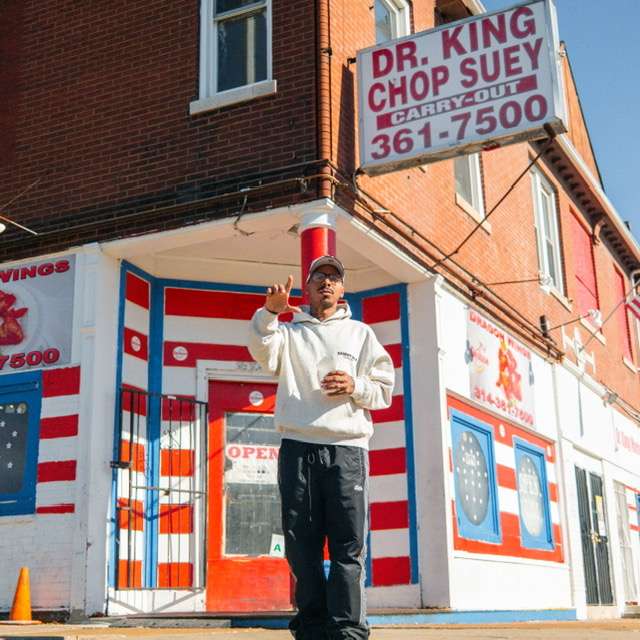
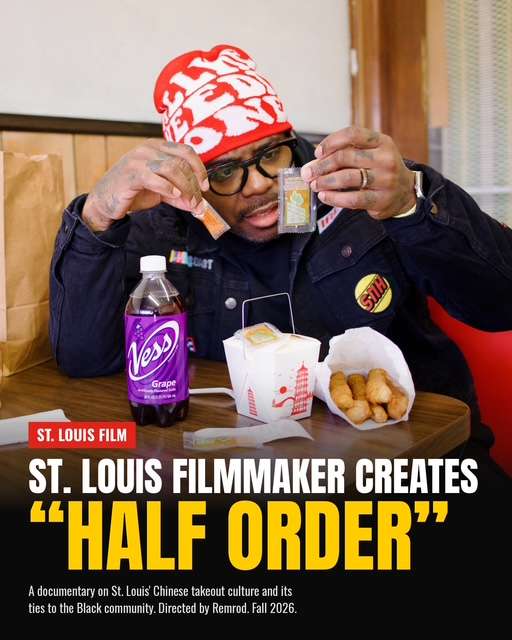
Eric “Remrod” Mayes’ documentary explores the relationship between Black St. Louis and Chinese takeout—and the lives connected on both sides of the counter.
Ask who has the best fried rice in St. Louis, and you have the starting point for a food debate. Ask why someone keeps going back to the same restaurant, and you have the beginning of a story.
That second question is where Half Order finds its heart.
Filmed and directed by Eric “Remrod” Mayes and co-written by Warren Armour, the documentary explores the deep connection between Black culture in St. Louis and the city’s Chinese takeout traditions. Its opening question—“Who has the best fried rice in St. Louis?”—leads into a broader conversation about family, memory, neighborhood loyalty and belonging.
The food brings people into the conversation. The relationships give it somewhere to go.
A Personal Story Begins at Lisa’s Chop Suey
For Remrod, the subject comes with a family history.
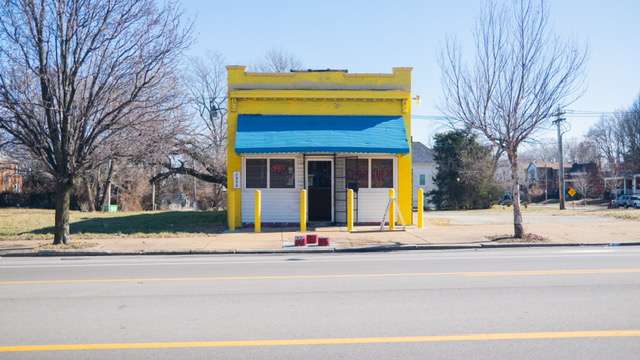
In Half Order, he returns to Lisa’s Chop Suey, the Jennings restaurant where he grew up eating with his family. That return gives the documentary a personal starting point: a filmmaker revisiting a place that belongs to his own story before exploring what similar places mean to others.
There is something compelling about approaching a city through a restaurant someone remembers from childhood. It puts everyday experience at the center of the conversation. The question becomes less about which places earn recognition and more about which ones people carry with them.
From Lisa’s, the film opens into the experiences of Black customers and Asian restaurant families whose lives have intersected through neighborhood Chinese restaurants for generations.
Those connections are the substance of Half Order: people growing up alongside one another, returning to familiar businesses and building relationships through the ordinary act of ordering a meal.
Both Sides of the Counter Have a Story
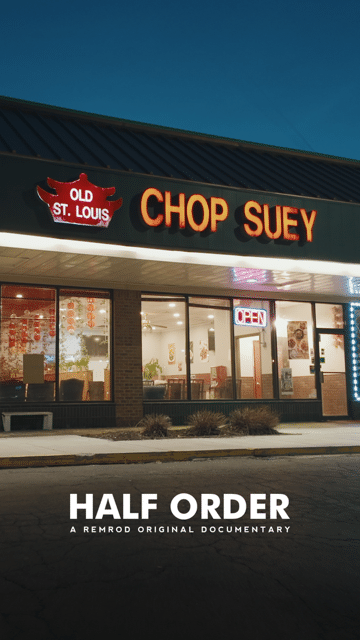
The documentary brings together restaurant owners, families and local voices across St. Louis, making room for the people preparing the food as well as those who grew up eating it.
That choice gives the subject depth. A neighborhood restaurant holds different memories depending on which side of the counter you know best. For customers, it may be part of a family routine. For the families running it, it is also a workplace and a livelihood.
According to the film’s overview, Half Order explores neighborhood loyalty, language, cultural differences and relationships that reach beyond the transaction.
Those subjects give the documentary room to consider connection without making everyone’s experience interchangeable. A shared neighborhood does not mean a shared perspective. Hearing from both customers and restaurant families creates space for those differences within the larger story.
The Flavors That Make It St. Louis

St. Louis-style fried rice, neighborhood chop sueys, St. Paul sandwiches, Vess sodas and 314 Day traditions all figure into the film’s portrait of the city.
Together, they provide the details that make this particular food story recognizable. Half Order follows a Chinese takeout culture that has developed its own local identity, shaped by the neighborhoods and generations surrounding it.
For a documentary about place, those details matter. They give an expansive subject—culture—something specific to hold onto: a dish, a restaurant, a family memory, a tradition.
They also give St. Louis viewers a point of entry into the larger questions the film raises. What makes a restaurant feel like part of a neighborhood? How does a food tradition become part of someone’s sense of home? And who gets to tell the story of how that happened?
From St. Louis to Chinatown

Although its roots are local, Half Order also travels beyond St. Louis, reaching New York’s Chinatown and China.
The overview describes those journeys as a way to explore how distinct St. Louis’ Chinese food culture has become. The wider geography places the city’s traditions in a broader conversation while keeping attention on the people and experiences that shaped them at home.
It is an ambitious frame for a film that begins with a question about fried rice. But that movement—from a familiar order to a much larger history—is central to the documentary’s premise.
A Place at the Table for Everyday St. Louis
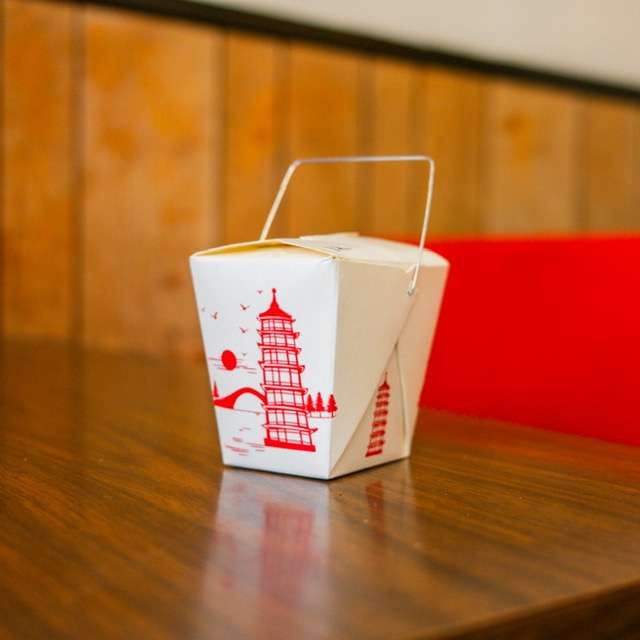
With conversations, humor, history, cinematic visuals and an original soundtrack, Half Order sets out to document where this culture came from and consider where it is headed.
Its strongest promise lies in the attention it gives to everyday life. Family meals and neighborhood businesses can become so familiar that their stories go unrecorded. Here, they are the reason to turn on the camera.
The debate over the best fried rice may never produce a winner everyone accepts. Half Order offers another reason to keep the conversation going: to hear what people remember, whom they grew up with and why a particular place still matters.
That is a St. Louis story worth sitting down for. To learn more about Remrod and Half Order, visit https://www.remrod.com

Follow DELUX Magazine for more St. Louis film, food, arts and culture coverage.

- ‘Half Order’ Tells a St. Louis Story Through Fried Rice, Family and Neighborhood Pride - Tuesday, November 10, 2026
- 2026 BET Soul Train Awards: Chicago Brings the Style, the Stars and the Soul - Monday, November 9, 2026
- Hometown Funny: Guy Torry Closes Out Gallery Laughs at Saint Louis Art Museum - Saturday, November 7, 2026